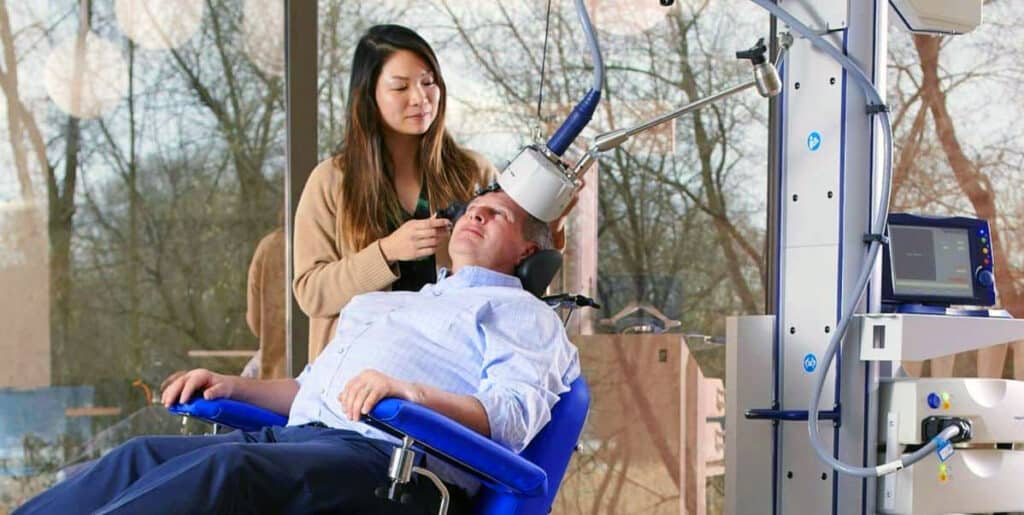

TMS Therapy

Two people embrace tightly in a dimly lit room by a window, both appearing emotional. One person is crying from overwhelming anxiety triggers as they hold the other, their reflection visible in a large mirror nearby.

How to Treat an MDD Diagnosis

Receiving a diagnosis of Major Depressive Disorder (MDD) can feel overwhelming, but it’s also a crucial first step toward healing. An MDD diagnosis means that you’ve been experiencing persistent symptoms like a pervasive low mood, loss of interest or pleasure, changes in sleep or appetite, fatigue, feelings of worthlessness, or difficulty concentrating, for at least two weeks, […]

anxiety triggers

How Long Does TMS Treatment Last?

If you’re considering Transcranial Magnetic Stimulation (TMS) therapy for depression or other mental health conditions, one of the most common questions is, “How long does it actually last?” This question has a few different answers, as “length” can refer to the duration of each individual session, the total number of sessions in a typical course, and most

tms therapy dip

What Are TMS Dip Symptoms?

If you’ve recently started Transcranial Magnetic Stimulation (TMS) therapy and feel like your depression symptoms are getting worse before they get better, you’re not alone. This temporary period of increased emotional distress is sometimes referred to as a TMS dip. While it can feel discouraging, it’s usually a short-term response and doesn’t mean the treatment

tms therapy

TMS Therapy Benefits: A Drug-Free Path to Relief

  If you’ve been living with depression that hasn’t responded to medication or therapy, you may feel like you’re running out of options. But there’s hope. Transcranial Magnetic Stimulation (TMS) is a non-invasive, FDA-approved treatment that offers relief for many people with treatment-resistant depression. With no drugs, no systemic side effects, and a growing body

nocturnal depression

Understanding Nocturnal Depression: Why Depression Can Feel Worse at Night

Many people with depression notice that their symptoms intensify in the evening or at night. This phenomenon—sometimes referred to as nocturnal depression—can make it especially hard to fall asleep, unwind, or feel emotionally safe when the day winds down. But why does depression often feel worse at night, and what can be done about it?

alternative treatments depression tms

Alternative Treatments for Depression: Exploring Options Beyond Medication

  Depression is more than just a passing feeling of sadness—it’s a serious medical condition that affects how a person thinks, feels, and acts. According to the World Health Organization, over 280 million people worldwide experience depression. While symptoms vary, common signs include persistent sadness, loss of interest in activities, fatigue, changes in sleep and

Scroll to Top